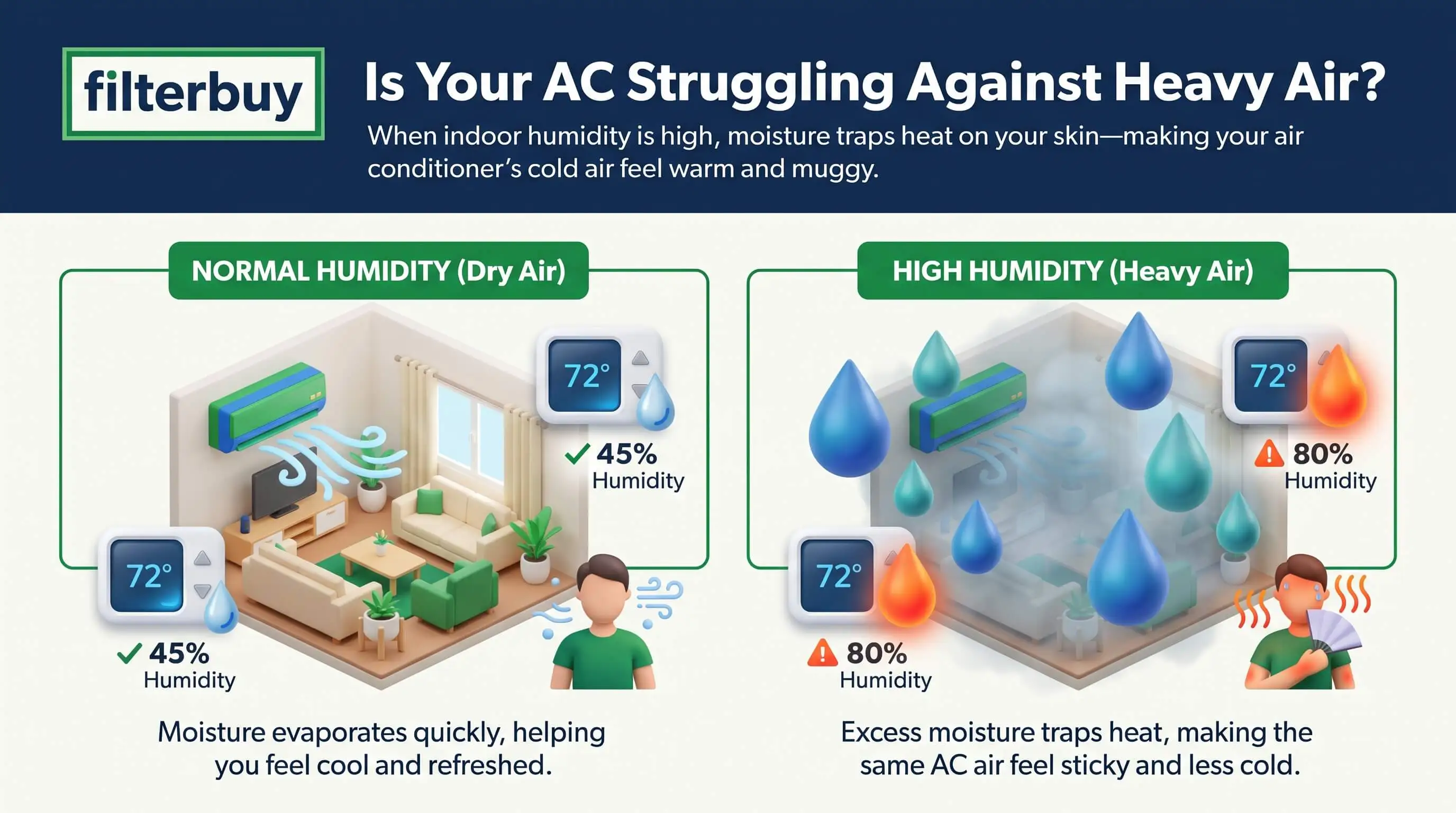
Your thermostat says 74°F, the vents are blowing, and your skin still feels damp. That clammy feeling is moisture, and yes, high humidity can make the air from your AC feel less cold even when nothing is broken.
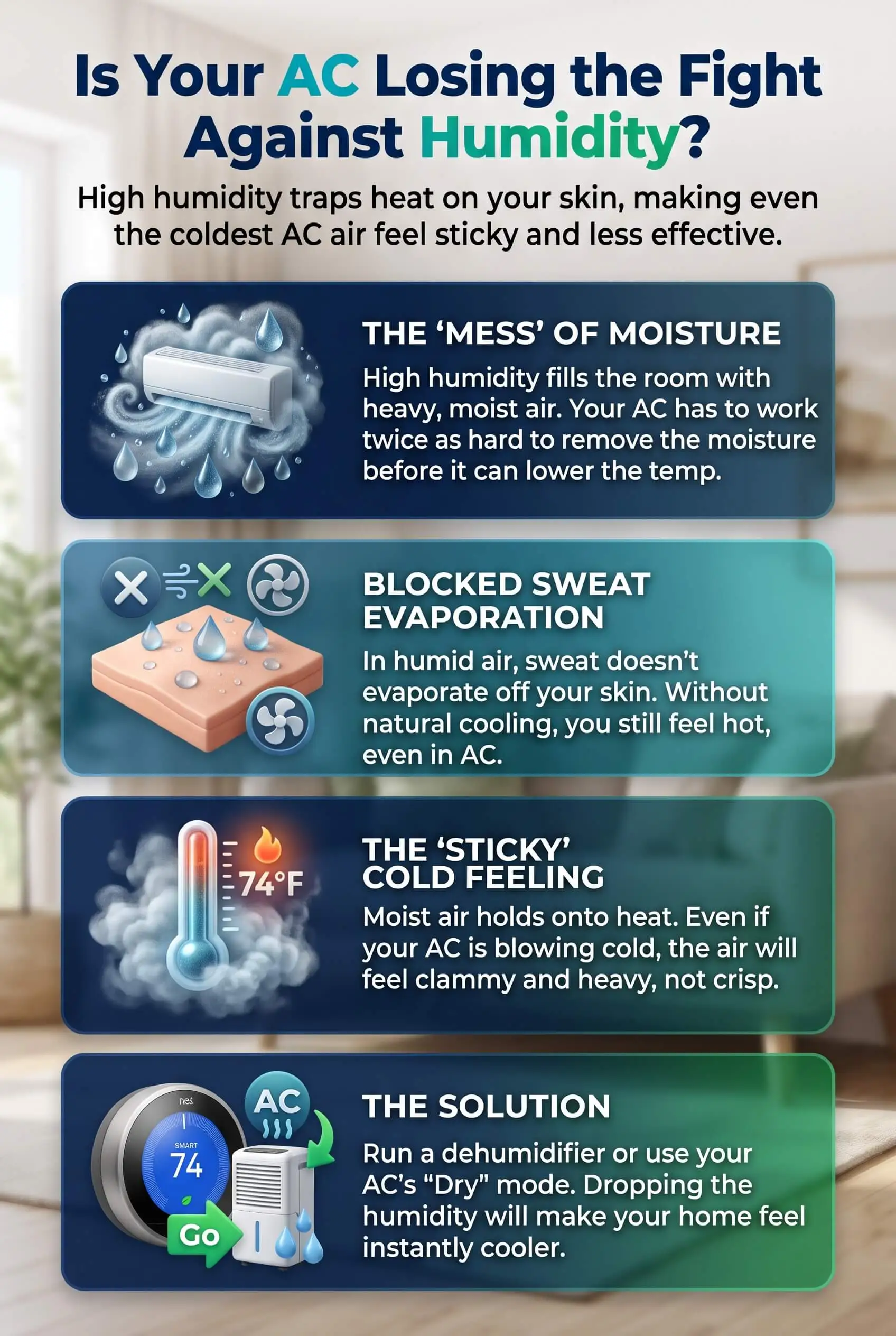
On a muggy day, your air conditioner splits its effort. Part of its capacity goes to pulling water out of the air, which leaves less for dropping the temperature. So the air comes out cool but never crisp, and the house never quite settles into comfortable.
That's usually when people start searching for why their air conditioner is not blowing cold air but running. Sometimes there's a mechanical fault behind it. Often, though, the culprit is humidity, and a ten-minute check at home will tell you which one you're dealing with and how to make the same thermostat setting feel colder.
TL;DR Quick Answers
air conditioner not blowing cold air but running
When your air conditioner is running but not blowing cold air, check humidity before you assume a breakdown. On muggy days the coil spends capacity pulling water from the air, so the vents feel cool but clammy. Weak or warm airflow, or ice on the line, points to a mechanical fault instead.
Measure humidity first: an inexpensive hygrometer reading above 60 percent means moisture is likely why the air feels less cold.
Check the vent temperature split: compare return and supply air with a probe thermometer. A normal drop plus high humidity points to moisture, not a failed part.
Look for mechanical signs: weak airflow, warm air, or ice on the copper line usually traces to a clogged filter, frozen coil, dirty condenser, or low refrigerant.
Set the thermostat fan to Auto: a fan left on On blows coil moisture right back into your rooms.
Shut it down if you see ice: running a frozen system strains the compressor, so turn it off and call a technician.
Top Takeaways
Humidity eats cooling capacity. Every bit of water your coil condenses is energy that didn't go toward lowering the temperature.
Cool but clammy usually means moisture. A normal temperature drop at the vents plus high indoor humidity points away from a mechanical fault.
Weak or warm airflow means something needs fixing. Check the filter, coil, and refrigerant before you blame the weather.
Set the fan to Auto, not On. A blower that never stops carries coil moisture right back into the house.
Keep indoor humidity between 30 and 50 percent. Once readings sit above 55 to 60 percent, a dehumidifier is worth a look.
Why Humid Air Feels Warmer Even When the AC Is Running
Latent Heat vs. Sensible Heat
Your AC fights two kinds of heat at once. Sensible heat is the number on your thermostat. Latent heat hides inside water vapor, so you can't see it, but you can definitely feel it. To pull that moisture out, the evaporator coil has to run colder than the dew point of the air crossing it, which makes water condense on the coil and drain away. That's how air conditioning removes humidity, and it draws on the same capacity that lowers the temperature.
On humid days, condensing water claims a bigger share of the work. Less is left for cooling. The air at the vent feels cool without ever feeling crisp.
How Your Body Reads Moist Air
You cool off when sweat evaporates from your skin. If the indoor air already holds a lot of moisture, that sweat lingers and you stay warm and sticky. Meteorologists lean on dew point, not temperature alone, to describe how muggy air feels for exactly this reason. Your thermostat reads the air, while your skin reads the air plus the water in it.
Humidity or a Real Fault? A Ten-Minute Home Check
Before you assume something's broken, run these checks. They cost almost nothing, and they'll show you which problem you actually have.
Measure Indoor Humidity
Humidity is invisible, but an inexpensive hygrometer makes it visible. Set one in a central room, away from the kitchen and bathrooms, and give it 15 minutes. Under 50 percent feels comfortable. Once readings climb above 60 percent, moisture is probably why the air feels less cold.
Check the Temperature Split at the Vents
Let the system run for at least 15 minutes. Then hold a probe thermometer at a return grille and again at the nearest supply vent. A healthy system usually shows a drop of roughly 15 to 20°F between the two. A normal split paired with high humidity points to moisture rather than a mechanical failure.
Rule Out Airflow and Refrigerant Problems
A narrow split with weak airflow tells a different story. In that case, your air conditioner is running but not blowing cold air for a mechanical reason, and moisture isn't to blame. A clogged filter, an iced coil, a dirty condenser, and low refrigerant all show up this way. See ice on the copper line? Shut the system down and call a technician.
Why Some AC Systems Struggle With Moisture
Oversized Units and Short Cycling
An oversized AC hits the set temperature fast and shuts off. Water needs time to condense and drain off the coil, so those short cycles leave moisture behind. Watch for the tell: the system kicks on and off every few minutes, and the house feels cold but sticky.
Fan Set to On Instead of Auto
With the thermostat fan on, the blower keeps running after the compressor stops. That moving air picks water back up off the wet coil and carries it straight into your rooms. Flip the fan to Auto so the coil can drain between cycles.
Air Leaks and High Blower Speed
Gaps around doors, attic hatches, and duct joints pull humid outdoor air inside all day. A blower set too fast creates its own trouble by pushing air across the coil before it can shed moisture. Either one raises indoor humidity even when the temperature looks fine.
How to Lower Indoor Humidity So the Air Feels Colder
Taking care of your home's air is one of the most direct ways to take care of everyone in it. These six steps are where I'd start:
Switch the thermostat fan to Auto.
Run the kitchen and bathroom exhaust fans while you cook and shower, and for a few minutes after.
Add a portable or whole-home dehumidifier if readings stay above 55 to 60 percent.
Change the air filter on schedule and keep the evaporator coil clean so air moves freely.
Clear the condensate drain line, because a clogged line stops the system from removing moisture.
Seal the obvious air leaks, and book a yearly tune-up with a seasonal HVAC maintenance checklist as your guide.
"In my years on service calls, most of the 'my AC isn't cold enough' complaints I hear in humid months trace back to a system that shuts off after six or seven minutes, before the coil can drain, so the house hits the thermostat setting and still sits at 60 percent humidity or higher. Moving the fan from On to Auto and clearing the drain line fixes more of those calls than any refrigerant work I've done."
Essential Resources
Maintaining Your Air Conditioner, U.S. Department of Energy: shows how a clogged filter or drain channel drags down efficiency and keeps a unit from pulling humidity out of the air.
What Is Humidity?, NOAA NESDIS: a plain-language look at relative humidity, dew point, and why dew point predicts how muggy the air will feel.
Comfort Conditioning and Thermal Comfort, ASHRAE Journal: explains how short cycling and oversized equipment push moisture back into a room.
Mold, CDC: what damp homes can do to your family's health, and simple ways to keep humidity down.
Heating, Ventilating and Air Conditioning Systems, N.C. Division of Public Health: lays out ASHRAE comfort ranges and the humidity limits that keep mold and dust mites in check.
Minimizing Moisture Problems in Homes Located in Hot, Humid Climates, HUD USER: research on how airflow and house pressure carry moisture indoors.
Effects of Air Temperature, Humidity, and Air Movement on Thermal Comfort, DOE Office of Scientific and Technical Information: a research summary on humidity limits and how moving air helps people stay comfortable in hot, humid conditions.
These resources explain how indoor humidity, airflow restrictions, and AC performance affect home comfort, while highlighting how regular tune ups help maintain efficient cooling, improve moisture control, and reduce the risk of mold and excess humidity.
Supporting Statistics
Humidity can add 25 degrees to how hot it feels. The National Weather Service puts the heat index for 96°F air at 65 percent relative humidity at 121°F. Moisture moves your comfort far more than most people expect.
The healthy target sits between 30 and 50 percent. The EPA recommends keeping indoor relative humidity below 60 percent, ideally between 30 and 50, and names air conditioners and dehumidifiers as the tools to get you there.
Past 55 percent, extra dehumidification earns its keep. ENERGY STAR points homeowners with central air toward whole-home dehumidifiers when readings stay above 55 percent, and its certified models remove the same moisture while using 20 percent less energy.
These statistics highlight how indoor humidity affects comfort, why maintaining 30–50 percent relative humidity matters, and how proper dehumidification, along with regular replacement of MERV 8 pleated furnace air filters to support airflow, helps your AC keep your home cool and comfortable.
Final Thoughts and Opinion
Humidity is the most overlooked reason I know of for an AC that suddenly "stops working" in summer. Most of the time the system runs fine and simply can't pull water out fast enough to make the air feel crisp. Cranking the thermostat lower rarely helps. Usually it makes short cycling worse.
So measure before you spend anything on HVAC system installation. A hygrometer and a probe thermometer cost less than a single service call, and together they'll tell you whether you need a dehumidifier, a quick fan setting change, or a technician. Get the moisture under control, and the same air will feel colder at the same setting.
Frequently Asked Questions
Does high humidity make an AC work harder?
Yes. Pulling water vapor out of the air uses cooling capacity, so on humid days your system runs longer to reach the same comfort level. Bring the humidity down and you take that extra load off the equipment.
What indoor humidity level should I keep with the AC on?
Aim for 30 to 50 percent, and stay below 60. A small hygrometer in a central room gives you a reading you can trust.
Why does my house feel cold but clammy?
Your AC is lowering the temperature faster than it's removing moisture. The usual causes are an oversized unit, short run cycles, or a thermostat fan left on On.
Why is my air conditioner not blowing cold air but running?
If the vent air feels only slightly cool and humidity reads high, moisture may be the cause. Weak airflow, warm air, or an iced line points instead to the filter, coil, or refrigerant, and replacing a clogged filter with a high quality filter may help restore airflow. A refrigerant leak calls for a technician.
Should I run a dehumidifier and AC together?
In humid climates, it often helps. The dehumidifier handles the moisture, which frees the AC to focus on temperature and lets you keep the thermostat a little higher.
Keep Your Home Cool and Dry This Season
A humidity reading and a quick vent temperature check will tell you whether moisture or a mechanical fault is making the air from your AC feel less cold. Grab those two numbers this week, and you'll know exactly how to get your home feeling cool and dry again, whether through simple adjustments or professional HVAC services.


