Don't take the air inside your car for granted. That filter is all that stands between your family and the pollen and road grime you can't see pouring through the vents, so it pays to know exactly who covers it and how to keep it fresh either way.
TL;DR Quick Answers
Cabin air filter replacement
Cabin air filter replacement means swapping out the pleated filter that cleans outside air before it reaches your vents. Most cars need a new one every 15,000 to 30,000 miles [VERIFY], or about once a year. On most models it sits behind the glove box and swaps out in minutes without tools.
Change it sooner if you drive in heavy traffic or on dusty roads, or during allergy season.
Watch for the warning signs of a clogged filter, such as weak airflow from the vents or a musty smell.
Match the part to your vehicle by year, make and model, then point the airflow arrow the same way as on the old filter.
An aging filter lets more pollution in. A modeling study found the share of roadway ultrafine particles reaching the cabin rose nearly 20% over 30 months of filter use.
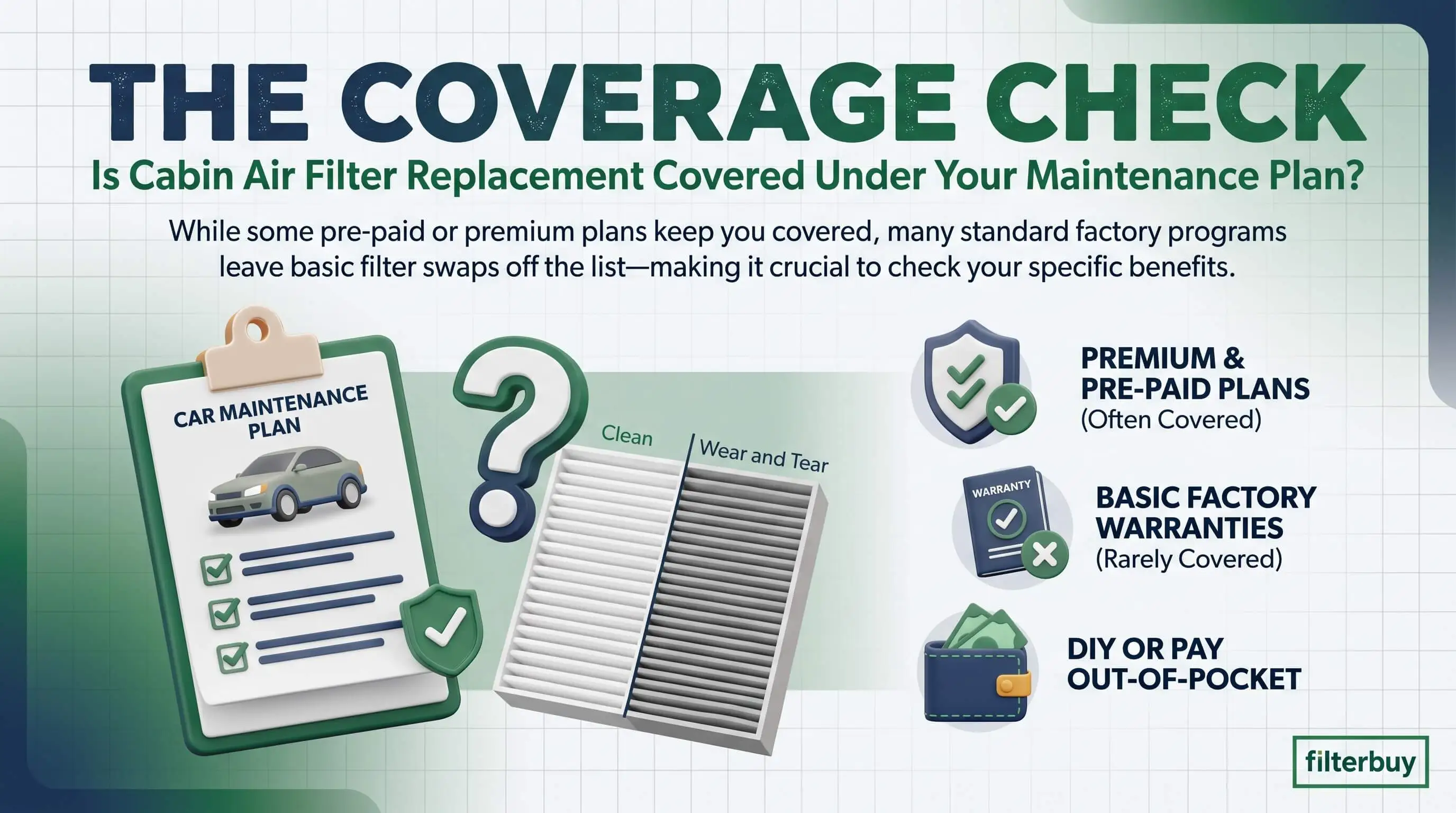
Check your maintenance plan before you pay. Many complimentary plans only inspect the filter, so a dealer replacement often costs extra.
Top Takeaways
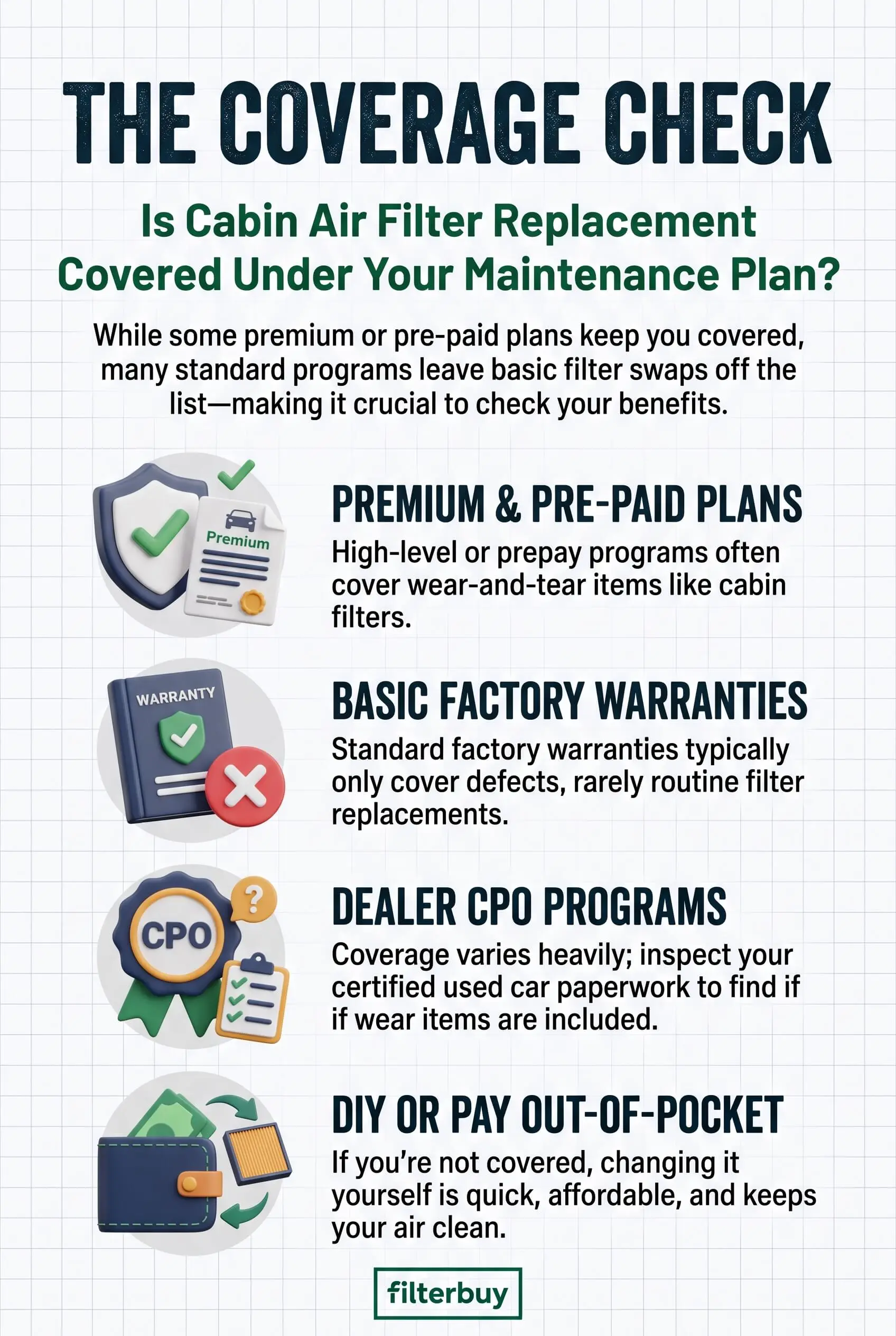
Your plan's fine print decides coverage. A plan pays for cabin air filter replacement only when it lists the filter and the change lands inside its time and mileage limits.
An inspection doesn't come with a new filter. Many complimentary plans check it, then bill separately for the part and labor.
Your factory warranty won't pay for it. Filters wear out by design, so they count as maintenance.
Doing it yourself is cheap and keeps your warranty intact. You pay only for the part, and routine maintenance you handle can't void your warranty on its own.
An old filter lets more pollution in. Change it every 15,000 to 30,000 miles [VERIFY], and sooner in heavy traffic or on dusty roads.
Why the Cabin Air Filter Counts as a Maintenance Item
Your cabin air filter, sometimes called a pollen filter, sits in the outside-air intake and catches particles before they reach you. Clogging up is its whole job, so it was always going to wear out.
Automakers treat anything that wears out through normal use as maintenance, including regular tune-ups. That's why your factory warranty won't pay to replace the filter, while a maintenance plan can, but only when the plan says so in writing.
Which Car Maintenance Plans Cover Cabin Air Filter Replacement?
Complimentary Factory Plans
The free plan that comes with most new cars sticks to oil changes, tire rotations, and inspections. Standard ToyotaCare leaves air filter replacement out, and Hyundai owners report paying for the cabin filter themselves at complimentary visits.
Paid and Upgraded Plans
Paying for an upgrade often brings filters into the deal. ToyotaCare Plus adds both cabin and engine air filters at their scheduled intervals.
Luxury Brand Programs
Some premium brands build it in from day one. BMW Ultimate Care lists cabin microfilters as covered for 3 years or 36,000 miles.
Dealer and Third-Party Service Contracts
A service contract isn't a warranty, and it covers only the items it lists. Read the covered-services page before you sign one or assume anything.
How to Check Whether Your Plan Covers It
Grab your plan paperwork and look for three answers.
Does the plan say "replace" or just "inspect"? An inspection checks the filter, and it doesn't buy you a new one.
Does the scheduled change land inside the plan window? A plan that ends at 25,000 miles won't cover a filter due at 30,000.
Do you have to use the dealer? Many plans pay only for work done at an authorized service center.
To see what a standard visit usually includes, compare your service menu with what a full tune-up typically covers.
Inspected vs. Replaced: The Line Most Owners Miss
Most surprise charges start with one word on the service checklist. Your plan pays the technician to inspect the filter, and when it comes out dirty, the advisor offers replacement as an add-on with its own parts and labor charge. Even if they recommend a top air filter, you can say no. A recommendation at a free visit isn't a bill you have to accept on the spot.
What Cabin Air Filter Replacement Costs When It Isn't Covered
Dealers commonly charge $40 to $80, and luxury models can run higher. Independent shops usually charge less. Doing it yourself costs only the part, since on most cars the filter sits behind the glove box and swaps out in minutes with no tools.
Most manufacturers call for a new filter every 15,000 to 30,000 miles [VERIFY]. Heavy traffic and dusty roads shorten that window, and so does allergy season. Pick up a replacement cabin air filter matched to your vehicle, line up the airflow arrow with the old one, and slide it in. It's a small job with a big payoff for everyone who rides with you.
Will Replacing It Yourself Affect Your Warranty?
No. The FTC states that a dealer can't void your warranty just because someone else did routine maintenance, and that someone can be you. Stick to the schedule in your owner's manual and save your receipts.
"After years of pulling cabin filters at the service drive, I've learned the plan paperwork matters less than the filter itself. Most of the ones I flag at a free visit are packed with leaves and road grime long before the schedule says to change them. Once a filter clogs, the blower works harder and sends less clean air to the people in the car."
Essential Resources
FTC: Auto Warranties and Auto Service Contracts. Lays out how a paid service contract differs from your factory warranty and what to compare before you buy one.
FTC Consumer Alert: Is Using the Dealer a Must?. Confirms you can handle routine maintenance yourself and keep your warranty, as long as you hold on to your records.
FuelEconomy.gov: Keeping Your Vehicle in Shape. Maintenance basics from the Department of Energy and EPA, including what a fresh filter will and won't improve.
Car Care Council: Car Care Guide. This free guide to service intervals points to a musty cabin smell as a sign your cabin filter needs a look.
Consumer Reports: Guide to Car Maintenance. A practical checklist for building your own routine once the free coverage runs out.
NHTSA: Check for Recalls. Run your VIN before any service visit so the dealer handles open recall work for free while your car is already in the bay.
American Lung Association: Who Is Most Affected by Outdoor Air Pollution?. Explains why drivers carrying kids, older passengers, or anyone with asthma have the most to gain from clean cabin air.
These resources explain what free maintenance plans cover, your right to decline additional services, and how regular cabin air filter replacement with high quality filters helps maintain clean cabin air without unnecessary dealership charges.
Supporting Statistics
More than 45 million people in the U.S. live within 300 feet of a major transportation facility, where vehicle emissions run highest. Drivers pass through that zone every time they head out on a busy road. (U.S. EPA)
In a UCLA study of 17 Los Angeles taxi drivers, high-efficiency cabin air filters cut in-cabin PM2.5 by about 37% and ultrafine particles by about 47% compared with normal driving on the factory filter. (PLoS ONE via NIH PubMed Central)
A modeling study found the share of roadway ultrafine particles reaching the cabin climbed nearly 20% over 30 months of filter use in moderate traffic. The older the filter, the more it gets through. (Transportation Research Part D via CDC Stacks)
Final Thoughts and Opinion
My take is simple. Your plan shouldn't decide when the cabin filter gets changed, because the filter's condition already tells you that. Coverage is a nice bonus when your plan lists it, yet the air your family breathes on every drive matters far more than who pays for a part this inexpensive.
Read your plan once so the service counter never catches you off guard. After that, check the cabin filter the way you'd check anything else you keep up with at home, change it on schedule or sooner, and file the receipt. Replacing an AC air filter takes just ten minutes behind the glove box and beats months of breathing whatever the old filter stopped catching.
Frequently Asked Questions
Does a factory warranty cover cabin air filter replacement?
No. Factory warranties cover defects in materials and workmanship, and a cabin filter wears out from normal use. The exception comes when a covered repair, such as a cracked filter housing, damages the filter along the way, and the warranty pays for the filter as part of that repair.
How often should a cabin air filter be replaced?
Most manufacturers recommend a new one every 15,000 to 30,000 miles, or about once a year. Change it sooner if you spend a lot of time in heavy traffic or on dirt roads, during allergy season, or whenever you notice weak airflow or a musty smell.
Can I replace my cabin air filter myself?
Yes, and on most cars it takes a few minutes with no tools. The filter usually sits behind the glove box. Match the part to your vehicle, follow the airflow arrow, and keep the receipt with your maintenance records.
Is the cabin air filter the same as the engine air filter?
No. The engine air filter cleans the air your engine breathes, while the cabin air filter cleans the air you breathe through the vents. Maintenance plans often treat them differently, so check each one on its own.
Why did my dealer recommend a cabin filter at my free service?
Your plan most likely pays for an inspection, not the part. When the technician finds a dirty filter, the advisor offers replacement as an add-on. MERV 8 pleated furnace air filters are used in home HVAC systems, while cabin air filters are designed for vehicles. You're free to decline it and swap the filter yourself for less.
Know What Your Maintenance Plan Covers Before Your Next Visit
Take a couple of minutes with your plan paperwork and find out whether it lists the cabin air filter as replaced or only inspected. Covered or not, a fresh filter matched to your vehicle keeps the air cleaner for everyone in the car at a fraction of the dealer price.